 11
11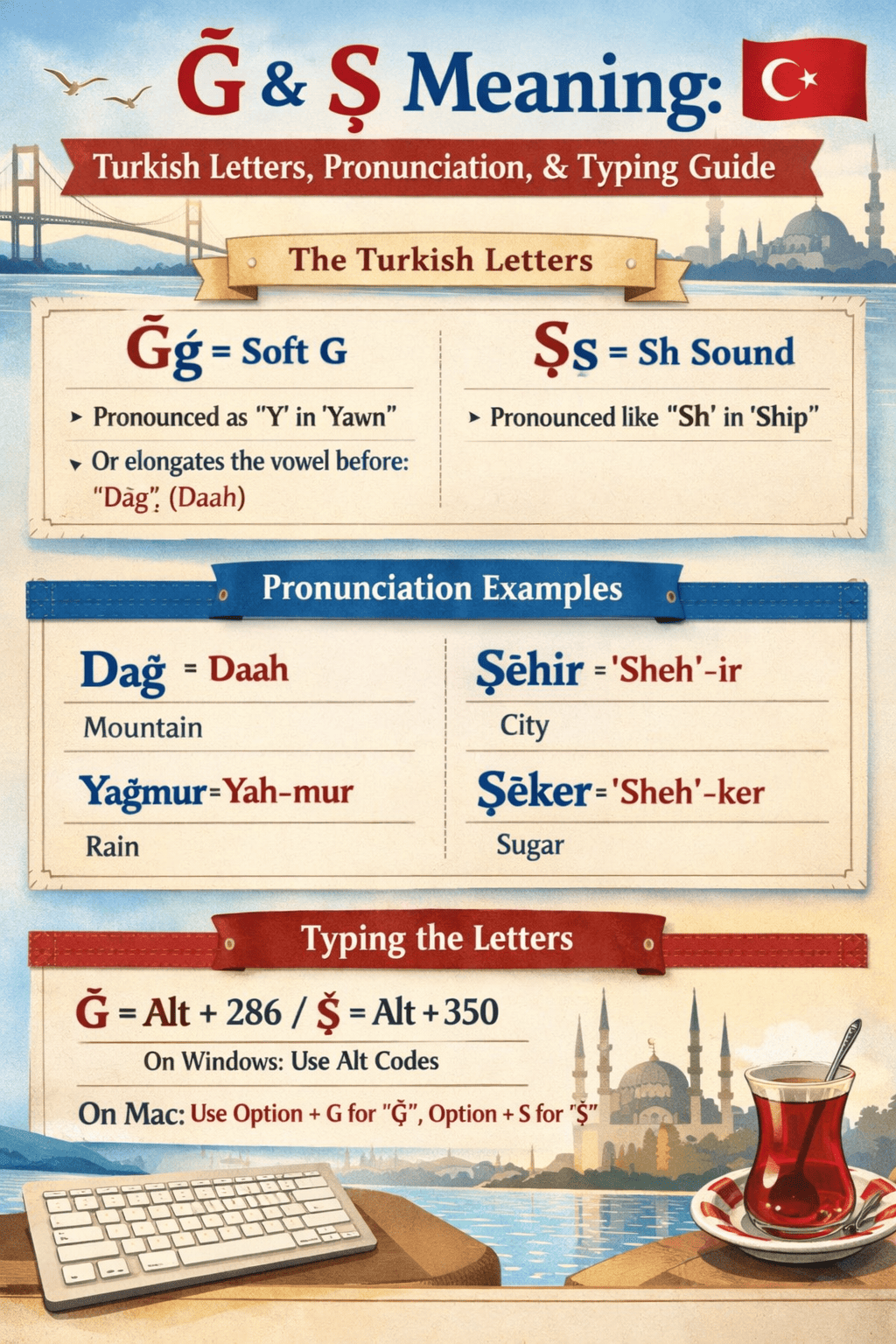
The term ğş is simply a combination of two letters from the Turkish alphabet: Ğ and Ş. It is not a real Turkish word and does not have a specific meaning.
People usually see ğş while learning Turkish, testing keyboards, or fixing text display issues. Because these letters are unique to Turkish, they often appear in language lessons or technical examples.
Understanding these letters helps with correct pronunciation, spelling, and typing in Turkish.
Turkish words follow specific sound patterns. The combination ğş does not naturally appear in Turkish vocabulary.
Instead, it is often used when discussing:
For example, someone learning Turkish may search for “ğş meaning” while trying to understand these special letters.
There are several reasons people encounter this letter combination online.
Common situations include:
Because the letters look unusual to English speakers, many people search to learn what they mean.
The modern Turkish alphabet has 29 letters. It uses a Latin-based writing system that was introduced in 1928.
A, B, C, D, E, F, G, H, I, J, K, L, M, N, O, P, R, S, T, U, V, Y, Z
Turkish also includes six special letters:
These letters represent sounds that do not exist in standard English spelling.
In 1928, Turkey changed its writing system. The country moved from the Ottoman Arabic script to a Latin-based alphabet.
The reform helped:
Today, this alphabet is used in schools, books, and digital communication.
The letter Ğ is called “Yumuşak G,” which means soft G.
Unlike most consonants, it does not produce a strong sound. Instead, it changes how nearby vowels are pronounced.
It usually:
| Word | Meaning | Pronunciation |
|---|---|---|
| dağ | mountain | daa |
| soğuk | cold | soo-uk |
| yağmur | rain | yaa-mur |
The letter itself is rarely heard clearly, but it changes the rhythm of the word.
The letter Ş represents the “sh” sound in English.
It is similar to the sound in words like shoe or she.
| Word | Meaning | Pronunciation |
|---|---|---|
| şeker | sugar | she-ker |
| şehir | city | she-hir |
| şarkı | song | shar-kı |
In Turkish, spelling is phonetic, so Ş always makes the same sound.
The letters S and Ş look similar but have different sounds.
| Letter | Sound | Example |
|---|---|---|
| S | “s” | sokak |
| Ş | “sh” | şok |
Using the wrong letter can change the meaning of a word.
| Feature | Ğ | Ş |
|---|---|---|
| Sound | Soft or silent | “sh” sound |
| Role | Changes vowel sound | Consonant |
| Position | Never at start of a word | Can appear anywhere |
| Function | Affects pronunciation | Changes meaning |
Both letters are important for correct Turkish spelling.
Typing these letters is simple on modern devices.
Many learners make small mistakes when writing Turkish letters.
Incorrect: dag
Correct: dağ
Solution: Remember that Ğ softens the vowel instead of sounding like “g.”
Incorrect: seker
Correct: şeker
Solution: Always pronounce Ş as “sh.”
Typing sarki instead of şarkı can confuse readers.
Solution: Use the correct Turkish keyboard when possible.
Most modern devices now support these characters without problems.
Correct Turkish spelling is important for search engines.
For example:
Using the correct letters helps:
The term ğş does not form a real Turkish word. It simply combines two important letters from the Turkish alphabet: Ğ and Ş.
Learning how these letters work helps with pronunciation, spelling, typing, and digital communication. They also play an important role in preserving the accuracy and identity of the Turkish language.
For anyone studying Turkish or creating Turkish content, understanding these characters is an important step.
No. It is just a combination of two Turkish letters and does not have a meaning.
Ğ lengthens or softens the vowel before it instead of making a strong sound.
Ş is pronounced like “sh” in English words such as shoe.
This usually happens when a website or document uses the wrong text encoding.
Long-press G to select Ğ and S to select Ş on most mobile keyboards.