 11
11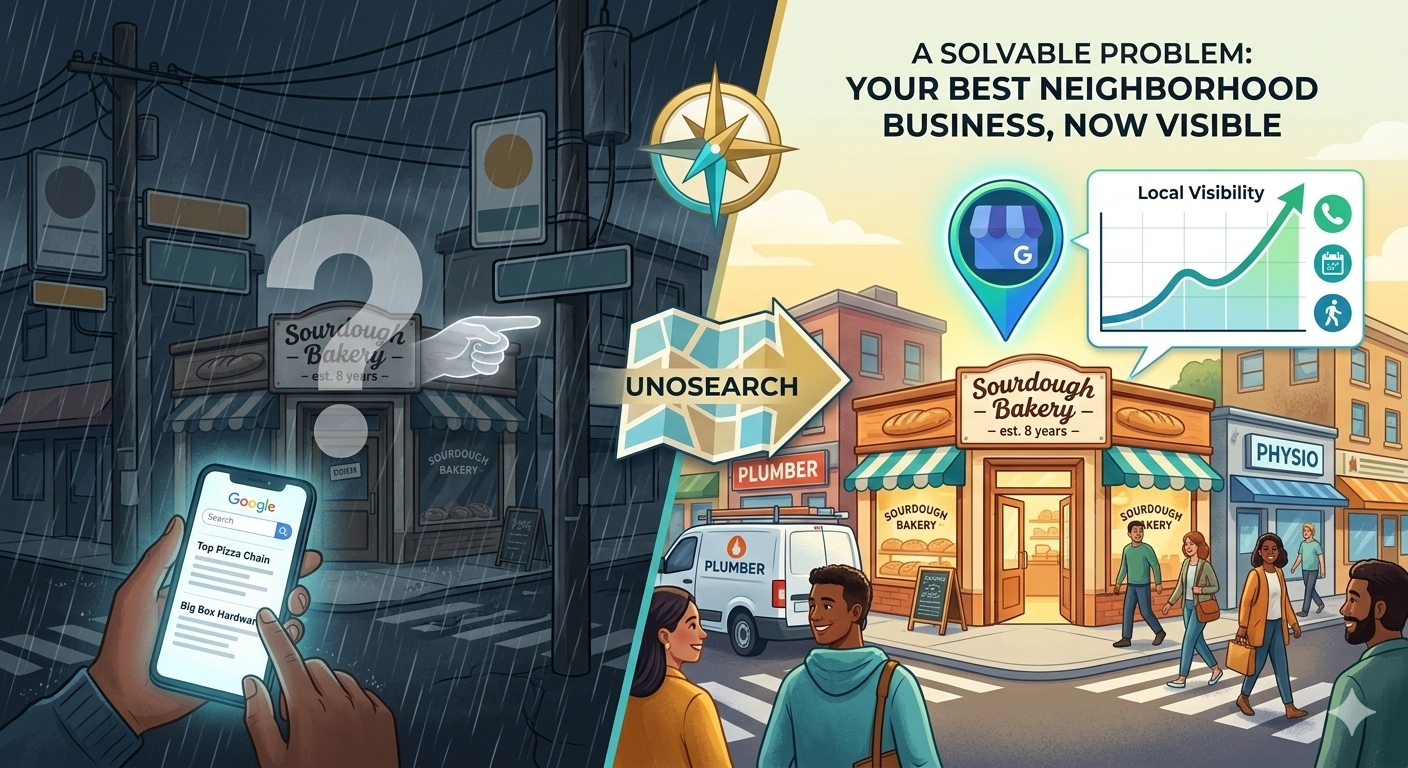
Think about the last time you searched for something near you. A plumber, a salon, a physiotherapist, maybe a decent bakery that is not a fifteen-minute drive away. You typed something into Google, looked at the top three or four results, possibly glanced at the map, and made a decision. You did not scroll to page two. You probably did not even scroll past the first cluster of results. Somewhere in that city, there was almost certainly a better option: a more skilled plumber, a more experienced physio, a bakery that had been quietly perfecting its sourdough for eight years. But you did not find them. Nobody does. Because being genuinely good at something and being visible online when someone nearby is looking for it are two completely different things, and Local SEO Services are the bridge between them. Most small business owners understand this in theory. Very few have actually built that bridge properly.
The Neighbourhood Search Problem Nobody Talks About Clearly
Local search is deceptively simple on the surface. You have a business. People search for businesses like yours. Ideally, your business comes up. But the mechanics underneath that are more layered than most owners realise, and the gap between appearing in local results and not appearing is often determined by factors that have nothing to do with the quality of the service being offered.
Google decides which local businesses to show in response to a search based on three things: relevance, distance, and prominence. Relevance is about how well your business profile and website match what the person searched for. Distance is obvious how close you are to where the person is searching from. Prominence is about how well-known and trusted your business appears to be across the web, based on reviews, citations, backlinks, and overall digital presence.
Of those three, distance is the one you cannot control. But relevance and prominence are entirely within reach and the businesses dominating local search in any given area have almost always done significant, deliberate work on both.
What Local Prominence Actually Requires
Building local prominence is not glamorous work. It is a collection of specific, largely unglamorous tasks that compound over time. Your Google Business Profile needs to be complete, accurate, and actively maintained with the right categories, updated hours, genuine photos, and regular posts that signal activity. Your business name, address, and phone number need to be consistent across every directory, listing, and platform that mentions you because inconsistencies create confusion for search engines and erode the trust signals that determine where you rank. Your reviews need to be recent, because a strong rating from three years ago with nothing since tells a different story than a steady stream of current feedback.
None of these individually is difficult. But they require a level of ongoing attention that most small business owners simply do not have the bandwidth to maintain while also running the actual business. Things get out of date. Review responses stop happening. The Google Business Profile sits with information that was correct in 2022 and has not been touched since.
Why Most Businesses Fix the Wrong Thing First
When a business owner realises they are not showing up in local search, the first instinct is usually to fix the website. Redesign it, add more content, maybe run some ads. And sometimes that helps. But frequently, the website is not the primary problem. The primary problem is that the local signals, the profile, the citations, the reviews, the consistency of business information across the web are weak, inconsistent, or missing. And a new website built on top of that foundation performs no better than the old one.
Diagnosing the actual constraint before investing in solutions is the work that most businesses skip, which is why so many of them cycle through agencies and tactics without making meaningful progress on local visibility. The problem was never what they were fixing.
Where Unosearch Comes In
Unosearch approaches local SEO the way a good diagnostician approaches a patient by finding the actual source of the problem rather than treating symptoms. That means auditing the full picture of a business’s local presence: profile completeness, citation consistency, review profile, on-page signals, and competitive positioning in the specific location and category the business operates in. Then building a plan that addresses the actual gaps rather than the assumed ones.
The businesses that have worked with Unosearch on local visibility consistently describe the same experience: the changes did not look dramatic from the outside, but the results in terms of calls, bookings, and foot traffic were significant and sustained. That is what happens when the foundational work gets done properly rather than skipped in favour of more visible but less impactful activity.
Conclusion
The business that deserves to be found and the business that actually gets found are not always the same business. Closing that gap is a technical and strategic challenge, not a question of quality. The good news is that it is a solvable problem and solving it produces the kind of compound return that most paid advertising channels simply cannot match. If you are thinking about how digital identity shapes visibility and how that plays out in practice, this piece is worth reading next.